Hyaluronic Acid: Product Forms and Which to Choose
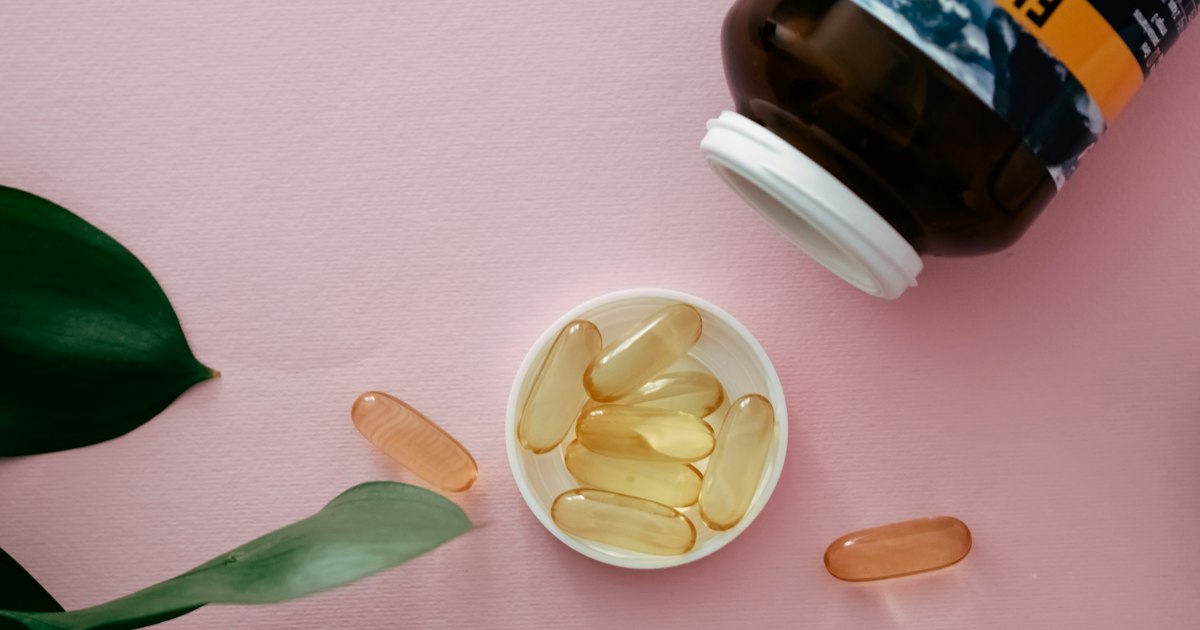
On store shelves, hyaluronic acid is represented by dozens of options: capsules, tablets, drinkable ampoules, powders, "joint cocktails," and complexes for skin. Prices differ several-fold, and labels are full of terms like "low-molecular-weight," "fermented," "natural." The editorial team explains what among this really matters.
Hyaluronic acid or sodium hyaluronate
The first thing a buyer sees is different names: "hyaluronic acid," "sodium hyaluronate," "hyaluronan." These are not different substances, but different chemical forms of the same molecule. Sodium hyaluronate is the salt of hyaluronic acid, in which the carboxyl groups are bound to sodium ions.
It is the salt that is most often used in production, because it is more stable and dissolves better in water. In the body, at physiological pH, hyaluronic acid already exists predominantly in the form of a salt, so for the consumer the difference between the names has practically no significance.
The only practical nuance is the recalculation of weight. Sodium adds a small fraction to the weight of the molecule, so 100 mg of sodium hyaluronate contains slightly less "pure" hyaluronic acid. For supplements, this difference is negligible.
The amount of sodium in a daily serving is also negligible compared to table salt in the diet, so there is no need to worry about it even for people who watch their salt intake.
Product forms: a comparison
Regardless of the form, the active substance is the same polysaccharide. What differs is convenience, stability, the presence of excipients, and cost.
| Form | Advantages | Disadvantages |
|---|---|---|
| Capsules | Precise serving, no taste, minimum of excipients | Sometimes a small amount per capsule |
| Tablets | Compact, stable | More fillers and binders |
| Drinkable solutions, ampoules | Easy to swallow, often with collagen | Preservatives, sweeteners, higher price |
| Powder | Flexible dosing, low price per gram | Precise scales needed, viscous solution |
| Complexes (with collagen, chondroitin) | Several ingredients in one product | Often low content of each component |
Capsules are the most rational option for most people: it is easy to ensure an amount close to the studied 120-200 mg, and the composition is usually minimal — sodium hyaluronate and the shell.
Drinkable forms are popular in the cosmetic segment, where hyaluronic acid is combined with collagen peptides. They are convenient, but look carefully at the composition: sugar, sweeteners, and flavorings sometimes make up a larger share of the product than the active substances.
Powder suits those who know how to accurately weigh small amounts. Keep in mind that hyaluronic acid forms a viscous solution in water, so it is better to add it to a drink gradually, stirring.

Source of raw material
Industrial hyaluronic acid is obtained in two main ways: by bacterial fermentation and by extraction from animal tissues, most often from rooster combs. Today, most of the world’s production comes from fermentation.
Fermentation-derived hyaluronic acid suits vegans and vegetarians, contains no animal proteins and, with proper purification, has stable quality. It was fermentation-derived products that were used in most Japanese studies on joints and skin.
Rooster comb extracts, like the raw material in the study by Kalman and colleagues (2008), contain not only hyaluronan but also other connective tissue components — collagen, polysaccharides. They can be considered a separate category of product, and the results of studies with them cannot be automatically transferred to pure hyaluronic acid.
For people with an allergy to birds or eggs, as well as for those who follow a plant-based diet, the choice is obvious — fermentation-derived raw material. Conscientious manufacturers indicate the source on the label or in the product description.
- Fermentation:vegan, stable, without animal proteins.
- Rooster combs:a natural complex of components, possible animal allergens.
- Not indicated:a reason to ask the seller a question.
Molecular weight on the label
Manufacturers increasingly write "low-molecular-weight" or "high-molecular-weight" hyaluronic acid on the packaging, and sometimes indicate specific figures in kilodaltons. For creams and serums, this has real significance: the size of the molecule affects whether it will remain on the surface of the skin or penetrate deeper into the epidermis.
For oral supplements, everything is more complicated. The study by Kimura and colleagues (2016) shows that in the intestine hyaluronan is largely broken down by the microbiota into oligosaccharides. So whatever the molecular weight in the capsule, fragments are what reach the tissues.
This does not mean that molecular weight is unimportant at all: in the studies by Tashiro (2012) and Oe (2017), specific raw material with certain characteristics was used, and it is logical to choose products close to those studied. But marketing claims that "low-molecular-weight is absorbed 10 times better" have no reliable clinical confirmation.
If the molecular weight is indicated, it is more a sign of the manufacturer’s transparency than a guarantee of higher effectiveness. The absence of any information about the raw material is a minus for the product.
Mono-product or complex: how to choose
A mono-product with hyaluronic acid allows you to know exactly how much active substance you are getting and to assess the effect from it specifically. This is the best option if the goal is to check whether hyaluronic acid helps you.
Complexes "for joints" with glucosamine, chondroitin, and collagen or "for skin" with collagen, vitamin C, and biotin can be convenient, but in them each component is often present in a small amount. Check whether the hyaluronic acid content approaches 80-200 mg per daily serving.
When choosing, the editorial team advises paying attention to: the hyaluronic acid content per serving (not per capsule), the source of raw material, the minimum amount of excipients, the presence of a certificate of analysis and, for athletes, independent certification for the absence of prohibited substances.
Regarding price: a more expensive product is not necessarily better. A useful way to compare is to calculate the cost of 100 mg of hyaluronic acid in different products; often simple capsules turn out to be more advantageous than "premium" drinkable ampoules.
Editorial conclusions
Hyaluronic acid and sodium hyaluronate are practically the same thing for the consumer; the name on the label should not affect the choice.
The most practical form is capsules with fermentation-derived raw material and a content close to the studied 120-200 mg per day.
Molecular weight matters for creams, but for oral supplements its significance is often exaggerated; the transparency of the manufacturer and quality control are more important.
We also recommend reading "How to Take Hyaluronic Acid: Dosage, Timing, Duration," "Who Should Not Take Hyaluronic Acid," and "Hyaluronic Acid: What It Is and How It Works."
References
- Kimura M, Maeshima T, Kubota T, et al. Absorption of orally administered hyaluronan. J Med Food. 2016;19(12):1172–1179.
- Balogh L, Polyak A, Mathe D, et al. Absorption, uptake and tissue affinity of high-molecular-weight hyaluronan after oral administration in rats and dogs. J Agric Food Chem. 2008;56(22):10582–10593.
- Kalman DS, Heimer M, Valdeon A, Schwartz H, Sheldon E. Effect of a natural extract of chicken combs with a high content of hyaluronic acid (Hyal-Joint) on pain relief and quality of life in subjects with knee osteoarthritis. Nutr J. 2008;7:3.
- Tashiro T, Seino S, Sato T, et al. Oral administration of polymer hyaluronic acid alleviates symptoms of knee osteoarthritis: a double-blind, placebo-controlled study over a 12-month period. ScientificWorldJournal. 2012;2012:167928.
- Oe M, Sakai S, Yoshida H, et al. Oral hyaluronan relieves wrinkles: a double-blinded, placebo-controlled study over a 12-week period. Clin Cosmet Investig Dermatol. 2017;10:267–273.
- Fraser JR, Laurent TC, Laurent UB. Hyaluronan: its nature, distribution, functions and turnover. J Intern Med. 1997;242(1):27–33.
Andriy Melnyk
A strength-sports coach and author of programs for beginner and intermediate levels. Writes about training planning.